Color Clash
- 3.1
- Rating
- 10.00M
- Installs
- Free
- Price
 Analysis by App-foxy
Color Clash is a strategy game built around a very simple idea: paint your way to victory. I found it easy to understand within a few moments, but the short explanation hides the real question you keep facing while playing: should I secure what I have now, or take a risk to claim more? That decision is what gives each round its character.
Developed by VOODOO, the game is free to play and aimed at players aged 10 and over. It has already passed ten million installs, which makes sense once you see how quickly a match can begin. There is no long setup or complicated rulebook to study. You can pick it up during a spare minute, yet a careless move can still turn a comfortable position into a losing one.
My overall impression is positive, with an important qualification. This is not a grand strategy game with a huge campaign, elaborate diplomacy, or a world that changes dramatically over dozens of hours. It is a compact, accessible contest about territory, timing, and reading the space in front of you. If that sounds appealing, the best way to play is to treat every move as a tradeoff rather than an automatic push forward.
You May Also Like

 Blood Strike: 2.5 Anniversary
Blood Strike’s Loadouts Turn Every Drop Into a Tactical Gamble
A close look at Blood Strike’s custom loadouts: how fast access to signature weapons reshapes its battle royale rhythm, rewards preparation, and narrows the gap between fights.

 Pandora - Music & Podcasts
Pandora’s Music Is Easy to Start, but Harder to Recover
Pandora’s strength is its low-effort path from a seed to a station. Its weak spot is how much confidence it asks you to place in connection, setup, and quiet recovery.

 8 Ball Pool
 Is Built on Rivalries, Rematches, and Routine
A close look at the rivalries, rematches, shared routines, and unanswered safety questions that turn a quick pool match into a persistent mobile community.

 Samsung Music
’s Quiet Strength Is Playing What You Already Own
Its reach comes less from spectacle than from dependable access to a personal library. That simplicity is both the app’s strongest retention engine and its ceiling.

 AccuWeather: Weather Radar
AccuWeather Review: A Quick, Clear Forecast for Everyday Decisions
For everyday plans, the best forecast is the one you can understand quickly. AccuWeather makes rain timing, radar, and local conditions easy to act on, with a few trade-offs.

 Hill Climb Racing
Why Hill Climb Racing Still Turns Crashes Into One More Run
A tiny car, a bumpy hill and one more upgrade: Hill Climb Racing keeps resurfacing because its simple chaos makes every near-miss feel personal.
More From Our News Desk



How the decision-making works in Color Clash
I focus on how each choice changes the options available on the board, rather than treating every patch of color as an equal prize. In my experience, that makes it easier to tell a useful expansion from one that leaves a position awkwardly stretched. The next section looks at how to turn that habit into a practical way of weighing risk, timing, and your opponent’s likely reply.
Simple rules, meaningful choices
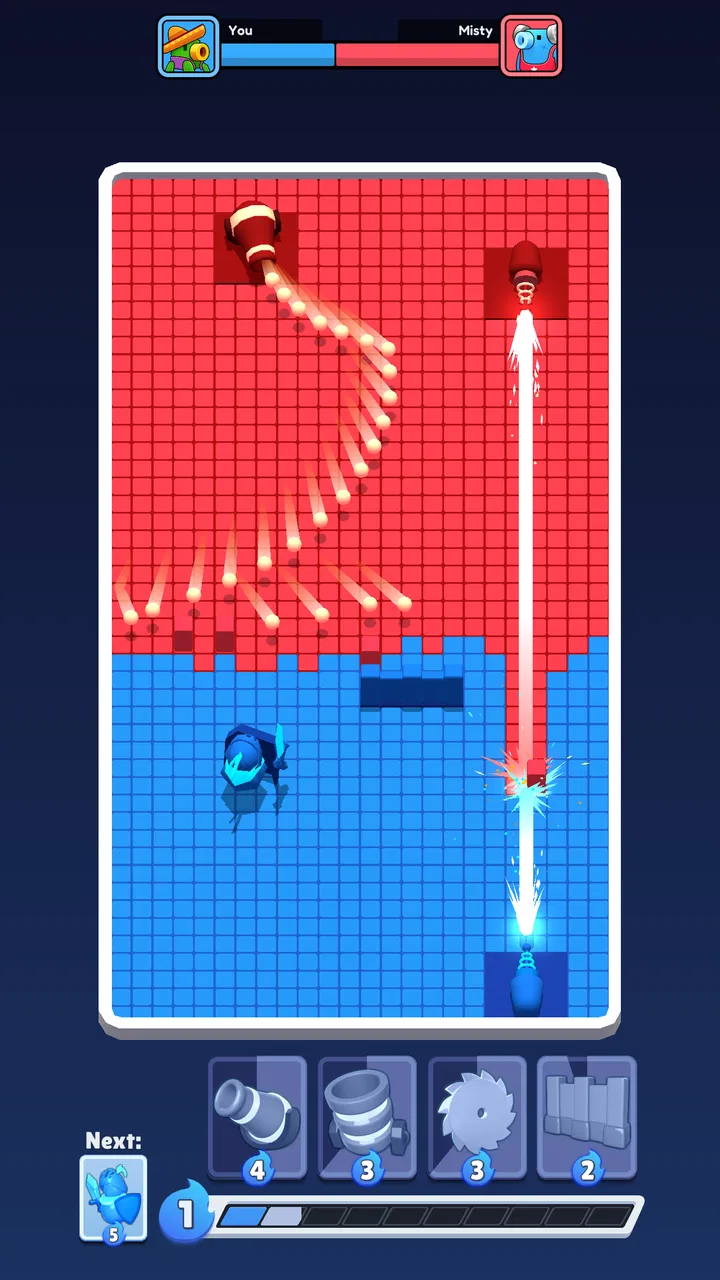
The first strength of Color Clash is its low barrier to entry. The visual goal is immediately understandable: color is not just decoration, it represents progress and control. That makes the game approachable for someone who does not usually play strategy titles. I could hand it to a casual player without needing to explain a long list of systems first.
However, simplicity does not mean that every move has the same value. A move that expands your area may look attractive, but expansion can also expose you to a counterattack or leave an important section poorly protected. The useful question is not simply “Can I take this space?” It is “What will taking this space allow the other side to do next?”
That change in perspective is where the game becomes more interesting. Beginners tend to chase the largest visible gain. After a few rounds, I started paying more attention to shape and access. A smaller gain that keeps my position connected can be better than a larger gain that creates awkward gaps. This is a practical lesson that the game teaches without needing a tutorial full of explanations.
Planning one move beyond the obvious
Color Clash rewards a short planning horizon. I rarely needed to calculate a long sequence, but I did need to imagine the immediate consequence of each decision. Before committing to an aggressive move, I found it useful to ask whether the new position would give me another useful option or simply make the board look larger.
This is also why the game works well in short sessions. You are not expected to remember a complicated economy or manage a long list of units. The mental workload is concentrated in the current layout. A quick glance can tell you where the pressure is building, but a better glance tells you which areas are genuinely valuable and which are tempting distractions.
One of my more useful habits was to pause briefly before taking an easy-looking section. If the move was available without much resistance, I considered why. Sometimes the obvious opening was valuable; sometimes it pulled attention away from a more important route. That small pause improved my results more than simply trying to play faster.
Why the visual presentation matters
The color-based presentation makes the state of a round readable at a glance. I could usually understand the broad balance without stopping to inspect every detail. That is important for a mobile strategy game, because unclear information would make short matches feel frustrating rather than tense.
At the same time, bright visual feedback can encourage impulsive play. Seeing your color spread is satisfying, and it is easy to confuse visible progress with secure progress. I learned to separate those two ideas. A large painted area may look impressive while still being vulnerable if its boundaries are poorly managed.
Everyday use: the five-minute break
For a realistic everyday scenario, I can see myself playing this during a short break while waiting for an appointment or taking a pause between tasks. The game starts quickly, gives me a clear objective, and does not demand that I reserve a long uninterrupted session. If I lose, I can understand the mistake and try again rather than feeling that a large amount of progress has disappeared.
That convenience is one of its strongest practical qualities. It is more focused than opening a social feed, but less demanding than settling into a large strategy campaign. The tradeoff is that the experience is built around repeated compact contests. Players who want a persistent world, a detailed story, or a long-term collection system may find the format too narrow.
When a safe move is actually the stronger move
Risk and reward are central to the game. An aggressive move can create momentum, but it can also stretch your position. A conservative move may look less exciting, yet it can preserve options and force the opponent to make the first mistake. I found that safe play was especially useful when the board already favored me and there was no need to turn a manageable advantage into a complicated fight.
This does not mean that caution is always correct. If you wait too long, the other side may occupy the spaces that make your position useful. The important distinction is between patience and passivity. Patience means waiting for a better exchange; passivity means allowing the board to become worse while doing nothing.
A practical rule helped me: take a risk when it changes the shape of the contest, not merely when it adds a little more color. If an action opens a route, cuts off access, or forces a response, it may be worth the danger. If it only makes the score look slightly better while leaving your position exposed, I usually preferred to consolidate.
Counterplay and the danger of tunnel vision
The most common mistake I made was focusing too closely on my own expansion. Once I saw a promising area, I wanted to complete it immediately. That tunnel vision made me overlook the opponent’s next opportunity. The remedy was simple: after identifying my preferred move, I checked the strongest reply available to the other side.
This habit gives the game more depth than its casual appearance suggests. You are not only building your own result; you are denying useful choices to someone else. Even without a complicated set of mechanics, that creates a basic form of counterplay. A move can be good because of what it gains, but it can be even better because of what it prevents.
I also noticed that a visually smaller position can sometimes be strategically healthier. Compact control is easier to understand and defend than a scattered collection of attractive pieces of territory. When I kept my attention on connected progress, I made fewer desperate moves later in the round.
Adapting instead of repeating a favorite opening
Repeating the same opening is tempting because it feels efficient. It can work when the circumstances are similar, but it also makes your decisions predictable. My better rounds came when I treated the opening as a question rather than a routine: where is the pressure, which area is likely to matter later, and what response would punish an early commitment?
Adaptation does not require a complex theory. It can be as small as changing the order of your priorities. Sometimes I valued immediate territory; sometimes I valued keeping a route open. Sometimes I accepted a modest gain because it improved my next position. These adjustments made the game feel less like memorizing a solution and more like responding to a changing puzzle.
This is also where the game’s limitations become clear. If you are looking for a strategy game with many distinct factions, highly specialized abilities, or a large number of interacting resources, this will feel lightweight. Its appeal comes from making a small set of decisions readable, not from creating an enormous decision tree.
What happens when the first plan fails
A useful test for any strategy game is how it handles a plan that goes wrong. In Color Clash, a poor early choice does not always make the rest of the round meaningless. I could often change priorities, protect what remained valuable, and look for a different route to victory. That ability to recover is important for casual players because it keeps a single mistake from feeling like an automatic exit.
Recovery still has a cost. If I expanded too far or ignored the opponent for too long, the later position became much harder to repair. The game therefore encourages adaptation without making mistakes irrelevant. I liked that balance: the first decision matters, but it does not necessarily decide everything.
For new players, I would recommend reviewing the moment when the board first became uncomfortable rather than blaming the final move. The losing move is often only the visible result of an earlier choice that created too few options. This way of reviewing a round gives the game more educational value than simply restarting immediately.
Depth over time: what keeps it interesting
The long-term appeal depends on whether you enjoy refining judgment in a compact format. The game does not need a huge amount of content to offer replay value if each round makes you notice something new about timing or positioning. I found that my improvement came less from learning a secret trick and more from becoming better at identifying which opportunities were genuine.
That kind of depth is subtle. It will satisfy players who enjoy small strategic puzzles and gradual improvement. It may not satisfy players who measure depth by the number of systems, maps, characters, or unlocks available. Both expectations are reasonable, but they lead to very different experiences.
The average rating is 3.5 from around sixty-eight thousand ratings, alongside roughly four thousand four hundred written reviews. I read that as a sign that the game has a clear audience but will not be universally loved. My own experience fits that interpretation: the core contest is approachable and enjoyable, while the limited scope can become repetitive for anyone wanting a broader strategic playground.
Free access and the mobile tradeoff
The game can be downloaded for free, with in-app purchases ranging from $0.99 to $99.99 per item. That price range is worth considering before installing, even if you intend to play without spending. I would approach the purchase options carefully and decide in advance whether the free experience already gives me enough value.
For me, the right mindset is to judge the game by its basic decision-making rather than by the possibility of buying extras. If you enjoy the core loop, short sessions can be worthwhile without turning every round into a shopping decision. If you dislike the central gameplay, spending more will not solve that problem.
This is one area where a traditional premium strategy game may be a better choice for some readers. Paying once for a clearly bounded experience can feel more comfortable if you want to avoid optional purchases. On the other hand, the free entry here makes it easier to test the game during a short session before deciding whether it deserves a place on your phone.
Who should play it, and who should skip it
I would recommend Color Clash to casual players who like quick tactical decisions, visual feedback, and the satisfaction of improving through repeated attempts. It is also a good fit for someone who wants to try strategy without committing to a complex campaign. The age rating of Everyone 10+ supports that broad accessibility, although younger players may still benefit from understanding that optional purchases are present.
I would be more cautious recommending it to players who need a deep progression system, a narrative campaign, or detailed control over many different units. It is not the right substitute for a large strategy title. It is better understood as a focused mobile contest where the board and the next decision matter more than a long list of menus.
It may also be a poor fit if you dislike repeated rounds built around similar fundamentals. Even when your decisions improve, the underlying appeal remains the same: claim, protect, pressure, and adapt. Players who need constant novelty may prefer a strategy game with changing scenarios or a stronger campaign structure.
Device compatibility and the current build
The current version is 1.22.2 and requires Android 8.0 or later. That makes it accessible to many Android users, though anyone with an older device should check compatibility before planning around it. I appreciate that the entry requirement is not aimed only at the newest phones, because the game’s compact format does not need to feel exclusive.
In practical terms, I would install it on a device where quick visual decisions are comfortable. A small screen can make crowded areas harder to read, especially when you are trying to compare several possible moves. The game remains approachable, but screen size can affect how confidently you judge the shape of a position.
My strategy verdict
Color Clash succeeds because it turns a familiar visual idea into a contest about choices. Painting territory feels immediate, but winning depends on understanding when expansion is useful, when restraint is stronger, and how your move changes the opponent’s options. I enjoyed the moments when a modest decision created a better position several moves later.
Its weaknesses are equally clear. The experience is narrower than a full-scale strategy game, and players who want extensive variety may find the repeated structure limiting. The presence of in-app purchases also means I would recommend setting personal spending boundaries before playing. Those points do not ruin the game, but they affect who will enjoy it over time.
VOODOO has made a strategy game that is easy to start and surprisingly good at teaching short-horizon planning. My advice is to play slowly enough to inspect the opponent’s reply, protect connected progress, and treat every tempting expansion as a possible liability. If you want a free, accessible game for brief sessions and enjoy learning from small tactical mistakes, I think it is worth trying. If you want a deep campaign or a large strategic simulation, choose a more expansive alternative instead.
After spending time with it, I would describe Color Clash as a compact strategy game rather than a complete strategy universe. That is not a criticism by itself. Its value comes from how much thought it can fit into a small, readable contest. For the right player, that focused design is exactly the reason to keep coming back.
FAQs for Color Clash
01What is Color Clash and how does it work?
Color Clash is an engaging puzzle game where players match colors to clear levels and earn points. The game challenges players with increasingly complex puzzles, requiring strategic thinking and quick reflexes. With a vibrant design and smooth gameplay, Color Clash offers hours of entertainment for puzzle enthusiasts.
02Is Color Clash free to play, and are there in-app purchases?
Color Clash is free to download and play on both Android and iOS platforms. However, it offers in-app purchases for players who wish to enhance their gaming experience. These purchases can include additional levels, power-ups, or cosmetic upgrades, allowing players to progress more quickly or customize their gameplay.
03What are the system requirements for Color Clash?
Color Clash requires iOS 10.0 or later for Apple devices, and Android 5.0 or higher for Android devices. It is optimized for smartphones and tablets, ensuring a seamless experience across different screen sizes. Make sure your device has enough storage space available for smooth installation.
04Does Color Clash offer multiplayer or social features?
Yes, Color Clash includes social features that allow players to connect with friends, compete on leaderboards, and share achievements. While it primarily focuses on single-player puzzles, the social integration adds an extra layer of competition and community engagement for players who enjoy interacting with others.
05Are there any accessibility features in Color Clash?
Color Clash is designed to be accessible to a wide audience, including options for colorblind players. The game offers adjustable settings for color schemes and contrast, ensuring that all players can enjoy the puzzles without visual impediments. Accessibility is a priority, making the game inclusive and enjoyable for everyone.
Pros
- Intuitive interface for easy navigation.
- Vibrant color palette enhances visuals.
- Smooth performance on most devices.
- Regular updates with new features.
- Offline mode available for convenience.
Cons
- Occasional ads can be intrusive.
- Limited free features; in-app purchases needed.
- Requires a stable internet for updates.
- Some levels may feel repetitive.
- Lacks advanced customization options.

Color Clash
Gallery